
Plastering & Skimming
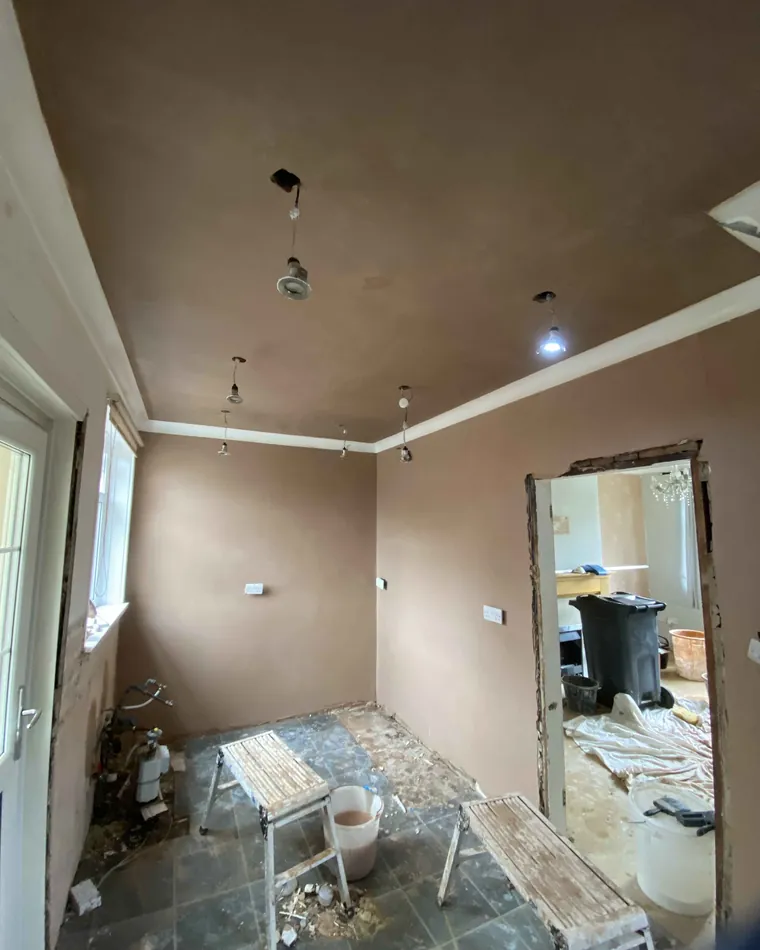
Walls and ceilings skimmed to a flat, paint-ready finish — single rooms, whole houses, extensions and loft conversions.
More on plastering & skimming
Wakefield · West Yorkshire
Skimming, re-plastering, external rendering, pointing and damp proofing across Wakefield and West Yorkshire. Plastering Plus is run by James, who has spent over ten years in the trade and does the work himself.
What we do
Six trades under one name. Most of it is skimming and re-plastering, but the rendering, pointing and damp work means an outside cause can be dealt with by the same person who puts the inside right.
Walls and ceilings skimmed to a flat, paint-ready finish — single rooms, whole houses, extensions and loft conversions.
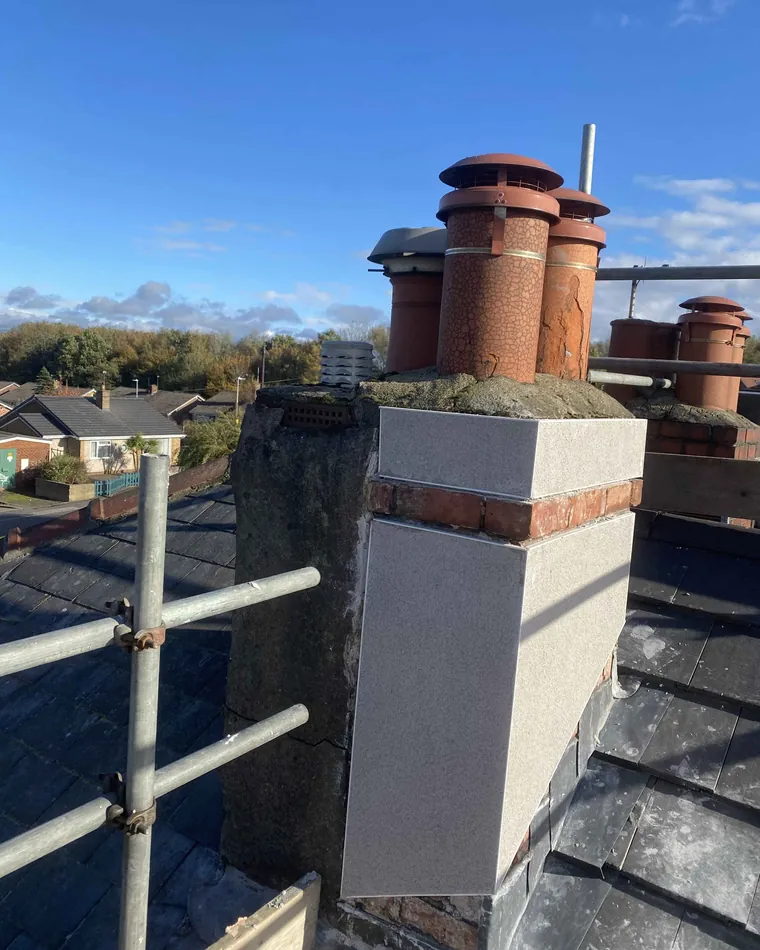
More on plastering & skimmingOutside walls, chimney stacks and extensions rendered and re-rendered, with the failed material taken back to something sound first.
More on external renderingCracks, blown patches, water damage and chimney breasts made good — repaired and feathered in, not automatically re-done wall to wall.
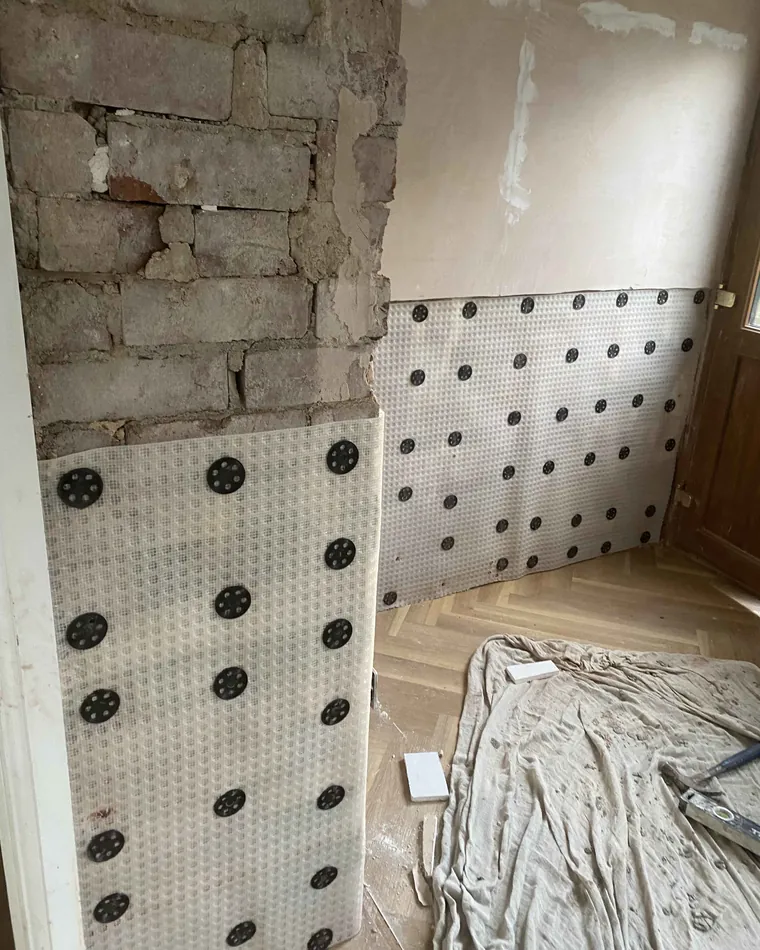
More on plaster repairsDamp walls dealt with at the cause, membranes and damp-proof systems fitted, then re-plastered back to a finished surface.
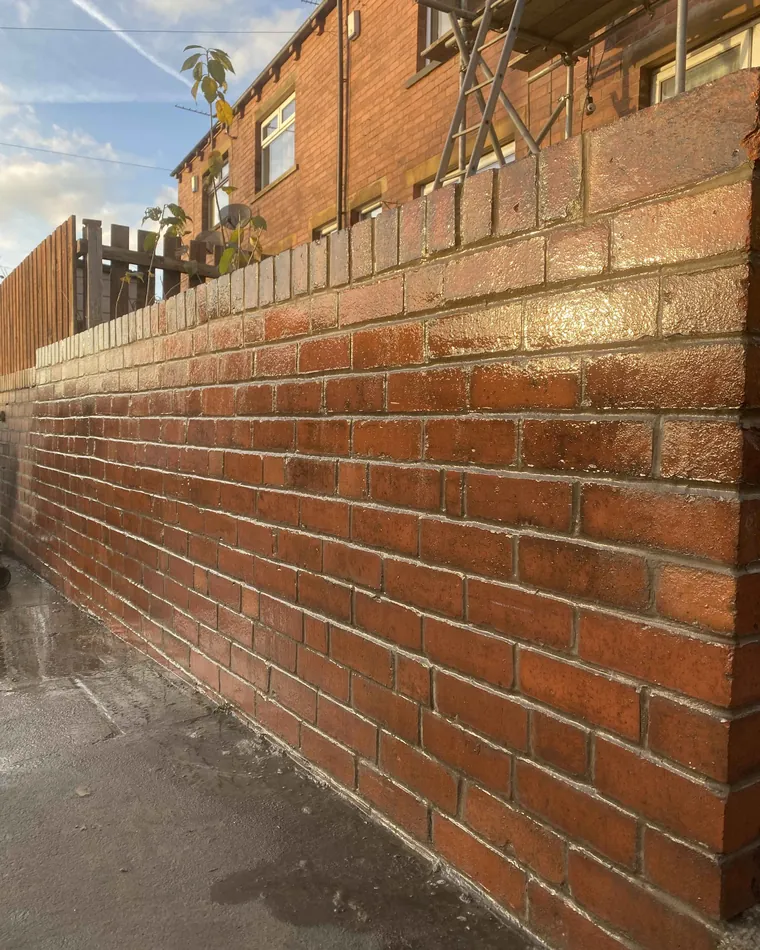
More on damp proofingRaked-out, weathered and washed-out mortar joints repointed on house walls, garden walls and chimney stacks.
More on pointing & brickworkPatios, paths and garden walls — the outdoor side of the business, often picked up by customers James has already plastered for.
More on landscaping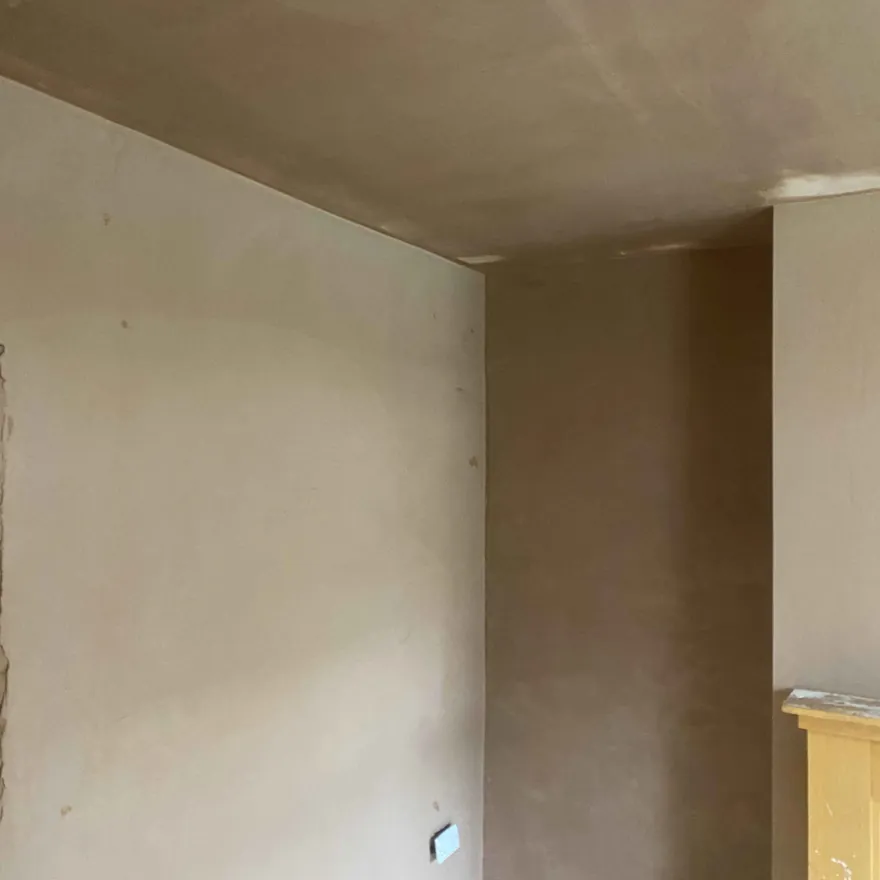
Why it matters
Anyone can put plaster on a wall. The difference between a finish that still looks right in five years and one that crazes along the board joints by next Christmas is almost entirely in what happens before the first coat goes on.
Suction is the big one. A dry, thirsty background pulls the water out of the plaster before it can be polished, and you end up with a dull, dusty surface that will not take paint properly. Boards need taping and the joints need filling, or they telegraph through. Beads have to be set true, or every corner in the room is visibly out. None of this shows in a photograph of a finished wall, which is exactly why it gets skipped.
Recent work
Every picture on this site is Plastering Plus's own — no stock photography, no borrowed portfolio.

Why Plastering Plus
One plasterer, one point of contact. He quotes the job, he turns up and does it, and he is the person you ring if something needs sorting afterwards.
Four of the five reviews on the company's own site make the same point unprompted: he arrived on the day and at the time he said, and one customer mentions being sent a confirmation the day before.
Dust sheets down, mess cleared, floors protected. It comes up in review after review, which for a trade that generates this much dust is the compliment worth having.
You get a figure for the work before anything starts, with what is included set out — not an hourly rate that drifts.
How it works
Ring or text 07389 034 045, email, or leave a callback request. Tell James roughly where you are and what needs plastering.
For anything past a small repair, seeing the walls is the only way to price it honestly — suction, what is behind the surface and how much making-good there is all change the job.
Set out so you can see what is included, and so you can compare it properly against anyone else's.
Sheets down, walls plastered, room swept. Then it is over to the drying, and the mist coat before you decorate.
Customers
Paraphrased from the reviews published on the company's own website. Plastering Plus has no Google Business Profile, so there is no star rating to quote — these are the customers' own words about the work.
Our joiner — who is very particular about his own work — recommended James, and knowing he trusted him to plaster to that standard gave us real peace of mind.
He came out to quote on the day I rang, turned up exactly when he said he would and confirmed by WhatsApp the day before. Flat walls, awkward corners, an arched ceiling and the window areas — he handled all of it, worked efficiently and cleaned up after himself. We'll be calling him back for the rendering.
James has worked on both my rental and my own property. He takes a lot of pride in what he does, and I can trust him to work to a high standard and to time.
He didn't just plaster the walls — he sorted out some damp issues too, and he has good connections with other trades, so my projects finished when they were meant to.
Ours was a very small job in the great scheme of things, but James still turned up as planned, left a good standard of finish and was very tidy.
A polite young man with a great work ethic. I'd use him again if I need him.
Coverage
Plastering Plus is based in Wrenthorpe, on the north-west side of Wakefield, and works right across the district — from Outwood and Stanley in the north to Crigglestone and Notton in the south, out through Horbury and Ossett to the west and over towards Normanton and the Five Towns in the east.
Thirty areas inside the Wakefield district are listed in full on the coverage page, along with the towns just outside it. If yours is not there, ring and ask — the answer is usually yes.
FAQs
Costs, drying times, artex, damp and the rest — answered properly rather than in one line.
There is no honest flat rate, because the same sized room can differ by hundreds depending on what is behind the walls. The things that move a plastering price most are whether it is a skim over sound plaster or a full strip back to brick, whether the ceilings are going too, how much boarding is needed first, access and parking, and how much making-good there is around sockets, pipework and old fixings. A ceiling costs more per square metre than a wall because everything is worked overhead. Plastering Plus price per job after seeing it, and the quote sets out what is included so you can compare it properly with anyone else's.
Reckon on somewhere between three days and a fortnight, and go by colour rather than the calendar — fresh plaster is a dark chocolate brown and turns an even pale pink when it is dry all the way through. Any patches still dark are still wet. A skim over existing plaster in a warm, ventilated room can be ready in three or four days; a wall taken back to brick and floated out can take two weeks or more. When it is ready, the first coat should be a mist coat — emulsion thinned with roughly 30% water — or the paint will sit on the surface and peel off later. Ventilate the room, but do not aim a heater at the wall: forcing it dry is what causes cracking.
Usually it can be skimmed over, and that is normally the cheaper and less disruptive route. If the artex is sound and the pattern is shallow, it gets sealed with a bonding agent and skimmed straight over. Heavy swirls and deep stipple are knocked back first so the finish coat is not fighting the peaks. Where the artex is loose, or over a wide area, over-boarding the ceiling and skimming the new boards gives a better result. One word of caution: artex applied before the year 2000 can contain asbestos fibres. It is safe when it is left alone and skimmed over, which is one of the good reasons not to sand or scrape it — if yours is that old, say so when you get a quote.
Often a repair will do, and it is worth asking before you agree to a whole room. A settlement crack, a patch blown by an old leak, or the scar left where a fireplace, radiator or stud wall came out can usually be cut out, filled and feathered into the surrounding plaster so it disappears under paint. The test is whether the plaster around it is still stuck to the wall — tapped over, sound plaster rings solid and blown plaster sounds hollow. If it is drummy across a wide area then patching just moves the problem along the wall, and re-plastering is the cheaper answer in the end.
Plastering is the inside finish: gypsum plaster on walls and ceilings, skimmed flat and left ready for paint. Rendering is the outside equivalent, and it is a different material doing a different job — a sand and cement or lime-based coat that has to shed weather, take frost and let the wall breathe, built up in layers rather than polished smooth. Plastering Plus do both, which matters on jobs like a damp chimney breast, where the cause is failed render on the stack outside and the symptom is the staining on the plaster indoors.
For a straightforward skim of one room, usually a day on site, sometimes two if the ceiling is going too or there is boarding to do first. Bigger jobs — a whole house, a loft conversion or walls taken back to brick — run over several days. The room stays out of action after that while the plaster dries, which is the part people underestimate: it is the drying, not the plastering, that sets when you can decorate. Furniture is best moved out or into the middle of the room and covered, and flooring wants protecting whatever you have been promised about tidiness.
Plastering Plus are based in Wakefield and work right across the district — Wrenthorpe, Outwood, Sandal Magna, Lupset, Thornes, Alverthorpe, Stanley, Horbury, Ossett, Crigglestone, Crofton, Normanton and the rest — plus the surrounding West Yorkshire towns and villages. The coverage page lists all of them. If you are just outside it, ring and ask rather than assuming — the answer is usually yes.
Call or text 07389 034 045, email jdwm2001@gmail.com, or use the callback form and James will ring you back. For anything more than a small repair it is worth him seeing the walls: suction, what is behind the surface and how much making-good there is all change the price, and quoting from photographs alone is how people end up with a figure that moves halfway through. Photographs are still useful for a rough steer before that visit, so send them over if you have them.
Ring or text 07389 034 045 and speak to James directly, or leave a callback request and he will come back to you.